What to look for beyond beauty to create a truly successful event
Choosing your wedding venue is one of the most exciting moments in the entire planning process. It is often the first place you visit, the first space where you begin to imagine the ceremony, the dinner, the sunset.
But precisely because this choice is so emotional, it is also the one that requires the most clarity.
A venue can be beautiful in photographs, impressive at first glance and perfect on paper. Yet a wedding is not defined by aesthetics alone. It lives through rhythm, logistics, light, comfort and the harmony between the space and the overall design.
Choosing the venue means choosing the invisible structure of the entire event.
The real capacity, not just the declared one
One of the most underestimated aspects when choosing a venue is capacity.
Every venue provides a maximum number of guests it can host, but it is important to understand what that number really means. Does it allow an elegant layout of the tables? Will guests be able to move naturally through the space? Is there enough room for a dance floor, for the cake cutting, or for floral installations?
A space that is too full loses elegance. A space that is too empty loses atmosphere.
A wedding with two hundred guests naturally requires a larger venue than a wedding with forty or sixty guests. However, the opposite is also true: when the guest list is small, choosing a venue that is too large can make the environment feel dispersed.
Guests may feel slightly lost in very large spaces. In these situations, it is often preferable to choose a more intimate venue that embraces the guests and creates a warmer and more engaging atmosphere.
The proportion between the space and the number of guests is one of the key elements that contributes to the perception of elegance in an event.
What to observe during a venue visit
When visiting a venue, it is important to try to imagine how it will actually look on your wedding day. This is not always an easy exercise, especially when the visit takes place under conditions very different from those of the event.
For example, you might visit a venue on a winter morning, with little natural light and a bare garden, while the wedding will take place months later during a summer sunset, with completely different temperatures and lush vegetation. In such circumstances, it becomes difficult to imagine the true atmosphere of the event.
For this reason, whenever possible, it is advisable to visit the venue during a season and time of day that is as close as possible to your wedding date. If your wedding will take place in the summer of 2026, for instance, it can be very helpful to have visited the venue during the summer of the previous year, ideally in the late afternoon or evening.
Even better is the opportunity to see the venue during another wedding or while it is already set up for an event. Observing a space that is already prepared allows you to better understand the real dimensions, the table layout, the flow of the different moments of the day and the type of scenography the venue can accommodate.
The plan B: part of the project, not an afterthought
When choosing a venue, it is essential to evaluate the outdoor spaces with the same attention as the indoor alternative.
A beautiful garden is not enough if, in case of rain, the indoor space does not meet the same aesthetic standards. The plan B should never feel like an emergency solution but rather an option designed with the same coherence and elegance as the original plan.
A room with low ceilings, cold lighting or poorly proportioned spaces can completely change the perception of the event.
An elegant wedding should remain elegant in every circumstance.
Accessibility and guest pathways
Another important aspect concerns the accessibility of the venue.
If some guests have mobility difficulties, it is essential to carefully observe the paths and access points throughout the space. Steep stairs, uneven terrain or long distances between areas can become problematic.
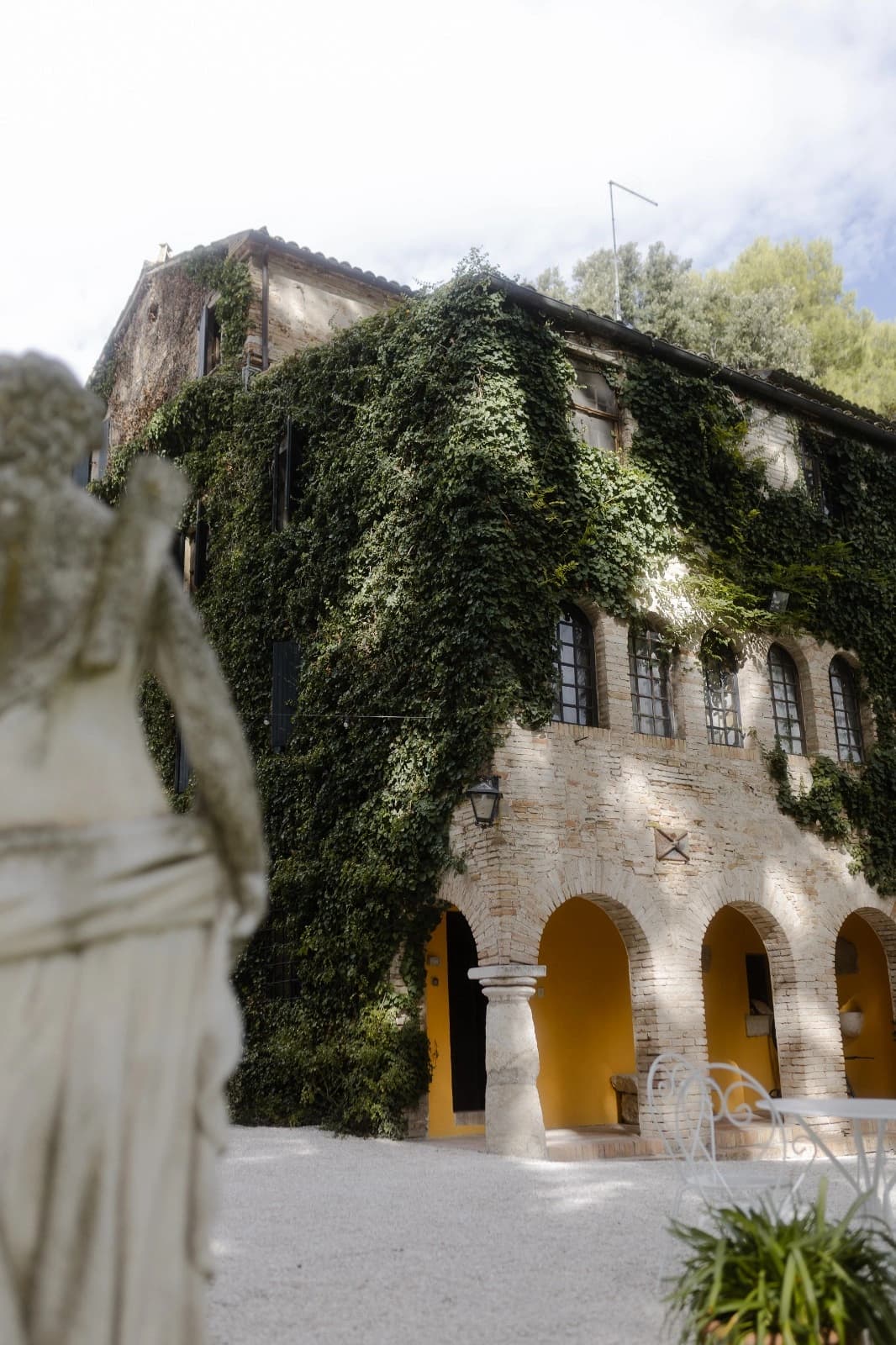
This situation is quite common in historic venues or countryside estates, where architectural charm sometimes comes with structural limitations.
During the visit, it is worth considering whether guests will be able to move comfortably and whether alternative paths exist for those who might need them.
A well-designed wedding is one where every guest can move through the space naturally and comfortably.
The importance of lighting
Lighting is another element that is often underestimated, yet it plays a crucial role in the overall perception of the event.
A wedding can be beautifully designed, but without the right lighting the atmosphere may not be fully expressed, especially in photographs.
When the reception takes place in the evening, lighting becomes an integral part of the design. Candles can create a wonderful atmosphere on tables and focal points, but they are rarely sufficient to illuminate an entire space.
If the venue does not offer adequate or warm artificial lighting, it may be necessary to integrate a dedicated lighting project. This can include suspended light installations, canopy lighting, chandeliers or other decorative lighting elements that enhance the overall atmosphere.
Today there are professionals specialized specifically in event lighting design, and involving them can make a significant difference in the final result.
Music and venue restrictions
When selecting a venue, it is also important to understand the role music will play during the wedding.
If you are planning a live band for the ceremony or a DJ for the evening party, it is essential to verify where these moments can take place and whether there are any restrictions.
Some venues — especially historic estates or locations close to residential areas or hotels — may have limitations regarding loud music, particularly in outdoor spaces during late hours.
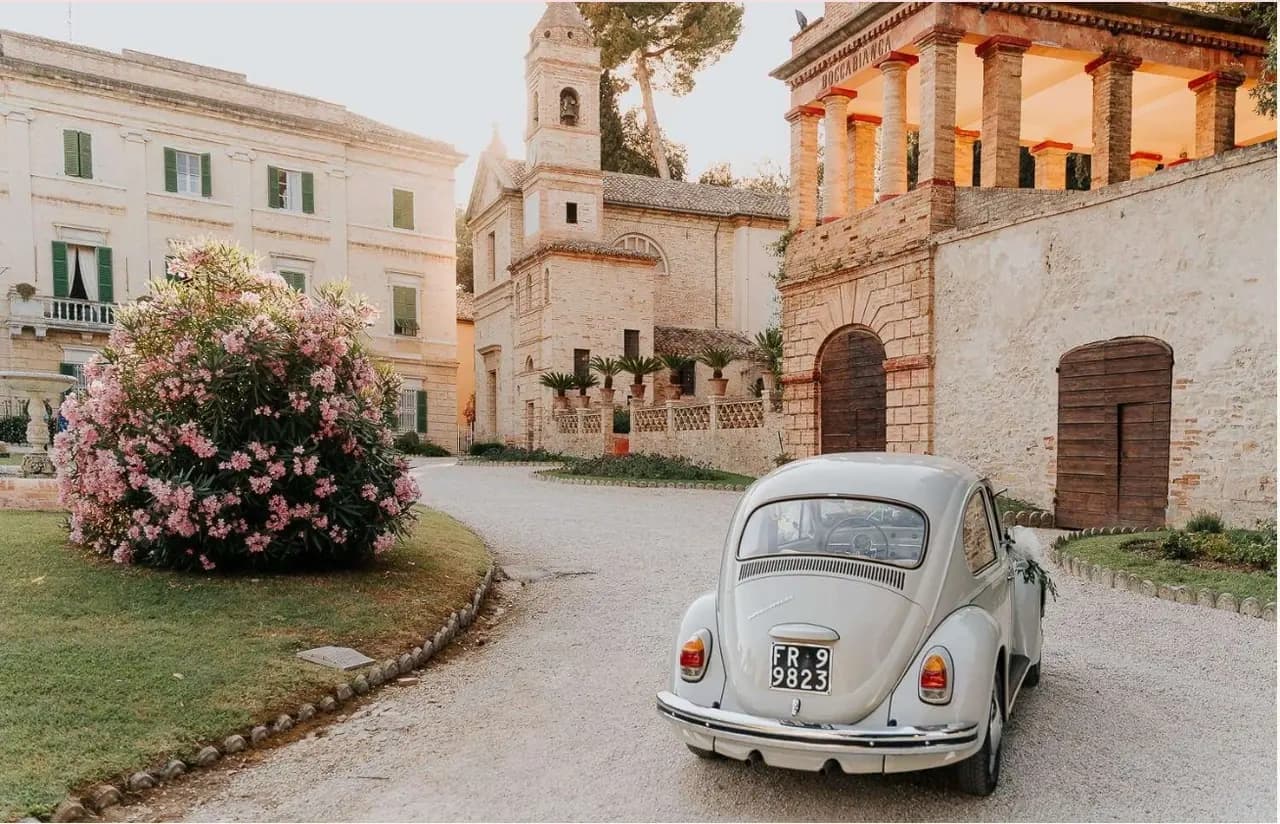
In certain areas, such as along the Conero Riviera, some venues have adopted alternative solutions to avoid disturbing the surrounding area, such as silent disco systems. In other cases, music may only be permitted indoors or in designated areas.
The structure of the building itself may also influence these decisions. In historic venues, for example, certain floors may be delicate and unsuitable for energetic dancing or powerful sound systems.
During the planning process it is always important to involve the professionals who will be working on the event. In one wedding held in a vineyard, for instance, it was necessary to build a small platform so that a harpist could perform safely, as the ground was not stable enough and the instrument risked sinking into the soil.
These small details, often invisible at the beginning, are what ultimately distinguish a venue that is simply beautiful from one that is truly suitable for your wedding.
Questions to ask the venue before confirming
During a venue visit it can be helpful to prepare a few practical questions. They not only clarify logistical aspects but also help you understand whether the space truly fits the type of wedding you are envisioning.
It is important to ask how tables are usually arranged and which spaces are used for the different moments of the day. Understanding the backup plan in case of bad weather is equally essential.
You should also ask about potential restrictions regarding music and the time until which the celebration can continue.
It can be useful to understand whether there are limitations on decorations, such as suspended installations, candles or scenic structures.
Finally, it is always valuable to ask how vendors typically work within the venue: where catering teams operate, which areas are dedicated to music and whether there are technical spaces that facilitate the organization of the event.
These questions transform a simple visit into a much more informed decision.
The venue as the first act of design
In our work, choosing the venue is never just an aesthetic decision. It is the very first act of design.
A space defines light, proportions, the rhythm of the day and the type of scenography that can be created. When the venue is chosen thoughtfully, everything else naturally finds its balance: the flowers, the materials, the palette and the atmosphere.
For this reason, the venue is not simply the place where the wedding happens.
It is the stage on which your story will unfold.