Why choosing seasonal flowers makes all the difference
When imagining the floral design of a wedding, it often begins with an image. A bouquet saved from inspiration, an arrangement seen online, a color palette that immediately captures attention.
Yet one of the most important elements in floral design is not always visible at first.
It is the season.
Flowers are not static materials. They are alive, constantly evolving, deeply connected to light, temperature and the rhythm of the year. For this reason, choosing seasonal flowers is not only a practical decision — it is an aesthetic one, almost narrative.
It means creating a wedding that truly belongs to the moment in which it is celebrated.
A design that resonates with the landscape, the air of that day, and the light that will move through the space.
The natural elegance of seasonal flowers
When a flower blooms in its natural season, it expresses its most authentic form.
Petals feel softer, colors appear deeper, and movement becomes more spontaneous. Arrangements gain lightness, palettes feel more harmonious, and the overall design appears effortless rather than constructed.
Working with seasonal flowers allows nature to guide the direction. The available varieties naturally complement each other, and the final result feels balanced, as though it has always belonged to that environment.
It is a quiet beauty, one that does not need excess to be perceived.
Seasonal wedding flowers
Spring
Spring is the season of lightness. Nature awakens, and floral design fills with movement, transparency and delicate tones.
Ranunculus, tulips, anemones, early peonies, garden roses, narcissus and clematis allow for soft, airy arrangements in which flowers seem almost to move with the light.
Spring palettes naturally unfold into blush tones, ivory, soft peach, lilac and fresh green. The result is a luminous, romantic aesthetic that feels deeply natural.
Summer
Summer brings stronger light, and floral design gains presence and structure.
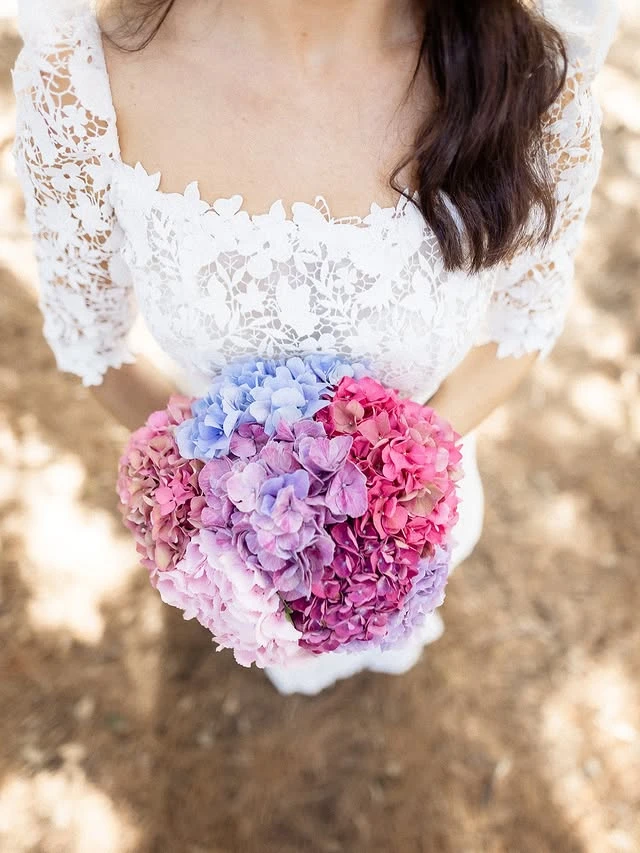
Hydrangeas, garden roses, early dahlias, cosmos, lisianthus and scabiosa create richer compositions while maintaining a refined balance. The floral material becomes more generous, yet still elegant.
Summer light enhances soft neutral palettes but also allows for more defined accents. Flowers interact with the environment and with the dynamic rhythm of the day, accompanying the transition from sunset into evening.
Autumn
Autumn introduces a deeper, more textured beauty. Colors become warmer, arrangements more enveloping, and light softer.
Dahlias, garden roses, chrysanthemums, amaranthus, berries and autumn foliage allow for floral scenography that feels rich yet refined.
Palettes move through terracotta, bronze, warm creams, burgundy and forest green. The result is a sophisticated, intimate atmosphere with natural depth.
Winter
Winter is essential, quiet and extremely elegant.
Anemones, ranunculus, early tulips, hellebores and amaryllis allow for refined compositions in which each flower has a defined presence.
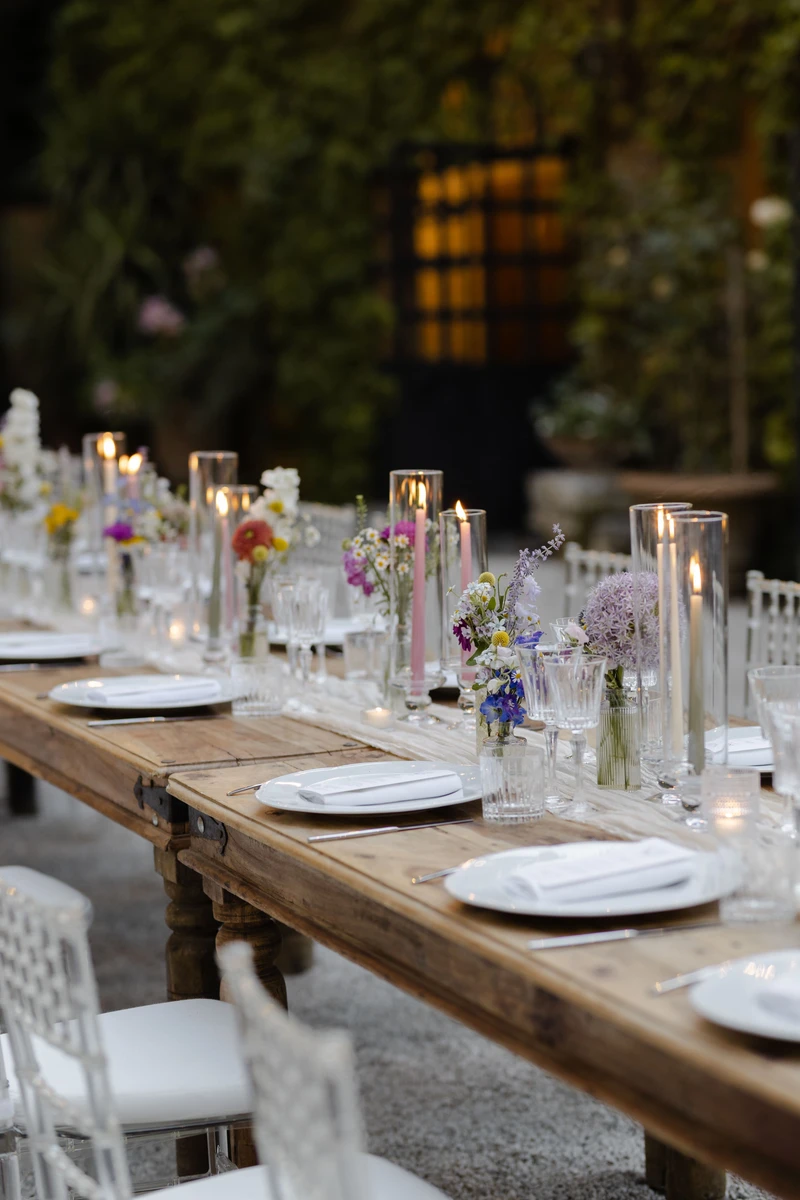
During this season, floral design often interacts with additional elements: candles, glass, textures and natural materials. The scenography is built through restraint, leaving space for light and atmosphere.
The result is a minimal aesthetic, yet deeply sophisticated.
How to choose your wedding flowers
Choosing wedding flowers is one of the most evocative moments of the entire design process. It is where the atmosphere begins to take shape, even before installations and scenography.
Flowers tell a season, but also a feeling. They reflect the light of the day, the movement of the air, and the character of the space.
Allowing the season to guide the selection is often the most natural starting point. The flowers seem to belong to that moment, as if they have always been part of the atmosphere. When this happens, the design feels spontaneous, never forced.
The venue also suggests a direction. A lush garden invites airy, natural compositions. A historic villa welcomes more structured and enveloping flowers. A seaside terrace calls for lighter palettes and softer movement.
Color is never just a chromatic choice — it is a perception. Soft, muted tones create delicate and romantic atmospheres, while deeper shades bring intensity and character. Often it is the transitions between colors that create true elegance.
Light also plays a quiet but fundamental role. Some flowers glow in daylight, others become more evocative at sunset or in candlelight. Imagining them in the moment they will be experienced helps create arrangements that truly belong to the event.
Finally, floral selection should always be conceived as a single narrative. The bouquet, ceremony, tables and installations may each have their own identity, but all should belong to the same atmosphere.
When this happens, flowers do not simply decorate the space.
They transform it.